Weather Alert in West Virginia
Flood Warning issued March 4 at 6:03AM EST until March 4 at 8:30AM EST by NWS Charleston WV
AREAS AFFECTED: Braxton, WV; Calhoun, WV; Doddridge, WV; Gilmer, WV; Harrison, WV; Lewis, WV; Pleasants, WV; Ritchie, WV; Roane, WV; Tyler, WV; Wirt, WV; Wood, WV
DESCRIPTION: * WHAT...Flooding caused by excessive rainfall continues. * WHERE...Portions of central and northern West Virginia, including the following counties, in central West Virginia, Braxton, Calhoun, Gilmer and Roane. In northern West Virginia, Doddridge, Harrison, Lewis, Pleasants, Ritchie, Tyler, Wirt and Wood. * WHEN...Until 830 AM EST. * IMPACTS...Flooding of rivers, creeks, streams, and other low-lying and flood-prone locations is imminent or occurring. * ADDITIONAL DETAILS... - At 555 AM EST, Earlier heavy rain has lessened this morning, but additional rounds of moderate to heavy rain are likely later this morning. Between 1 and 2 inches of rain have fallen and flooding is already occurring within the warned area. The upper reaches of Meathouse Fork is now in action stage and slowly rising. In addition, the South Fork Hughes River below Macfarlan is in action stage and slowly rising. At 16 feet, a low spot on Oxbow Road below the gage floods. - Additional rainfall amounts up to 0.5 inches are possible in the warned area this morning. Additional rain is likely late morning into the afternoon. - Some locations that will experience flooding include... Clarksburg, Weston, Spencer, Harrisville, Glenville, Grantsville, Stonewood, Nutter Fort, Salem, Pennsboro, West Union, Cedar Creek State Park, North Bend State Park, Jackson Mill, Arnoldsburg, Stonewall Jackson, West Milford, Burnsville, Lost Creek and Jane Lew. - http://www.weather.gov/safety/flood
INSTRUCTION: Turn around, don't drown when encountering flooded roads. Most flood deaths occur in vehicles. In hilly terrain there are hundreds of low water crossings which are potentially dangerous in heavy rain. Do not attempt to cross flooded roads. Find an alternate route. Report flooding to the National Weather Service by calling toll free, 800 401 9535, when you can do so safely.
Want more detail? Get the Complete 7 Day and Night Detailed Forecast!
Current U.S. National Radar--Current
The Current National Weather Radar is shown below with a UTC Time (subtract 5 hours from UTC to get Eastern Time).

National Weather Forecast--Current
The Current National Weather Forecast and National Weather Map are shown below.

National Weather Forecast for Tomorrow
Tomorrow National Weather Forecast and Tomorrow National Weather Map are show below.

North America Water Vapor (Moisture)
This map shows recent moisture content over North America. Bright and colored areas show high moisture (ie, clouds); brown indicates very little moisture present; black indicates no moisture.

Weather Topic: What is Snow?
Home - Education - Precipitation - Snow
 Next Topic: Stratocumulus Clouds
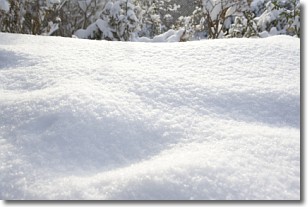
Snow is precipitation taking the form of ice crystals. Each ice crystal, or snowflake,
has unique characteristics, but all of them grow in a hexagonal structure.
Snowfall can last for sustained periods of time and result in significant buildup
of snow on the ground.
On the earth's surface, snow starts out light and powdery, but as it begins to melt
it tends to become more granular, producing small bits of ice which have the consistency of
sand. After several cycles of melting and freezing, snow can become very dense
and ice-like, commonly known as snow pack.
Next Topic: Stratocumulus Clouds
Weather Topic: What are Stratus Clouds?
Home - Education - Cloud Types - Stratus Clouds
 Next Topic: Wall Clouds
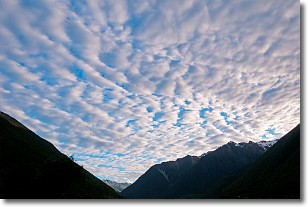
Stratus clouds are similar to altostratus clouds, but form at a
lower altitude and are identified by their fog-like appearance, lacking the
distinguishing features of most clouds.
Stratus clouds are wider than most clouds, and their base has a smooth, uniform
look which is lighter in color than a nimbostratus cloud.
The presence of a stratus cloud indicates the possibility of minor precipitation,
such as drizzle, but heavier precipitation does not typically arrive in the form
of a stratus cloud.
Next Topic: Wall Clouds
Current conditions powered by WeatherAPI.com